

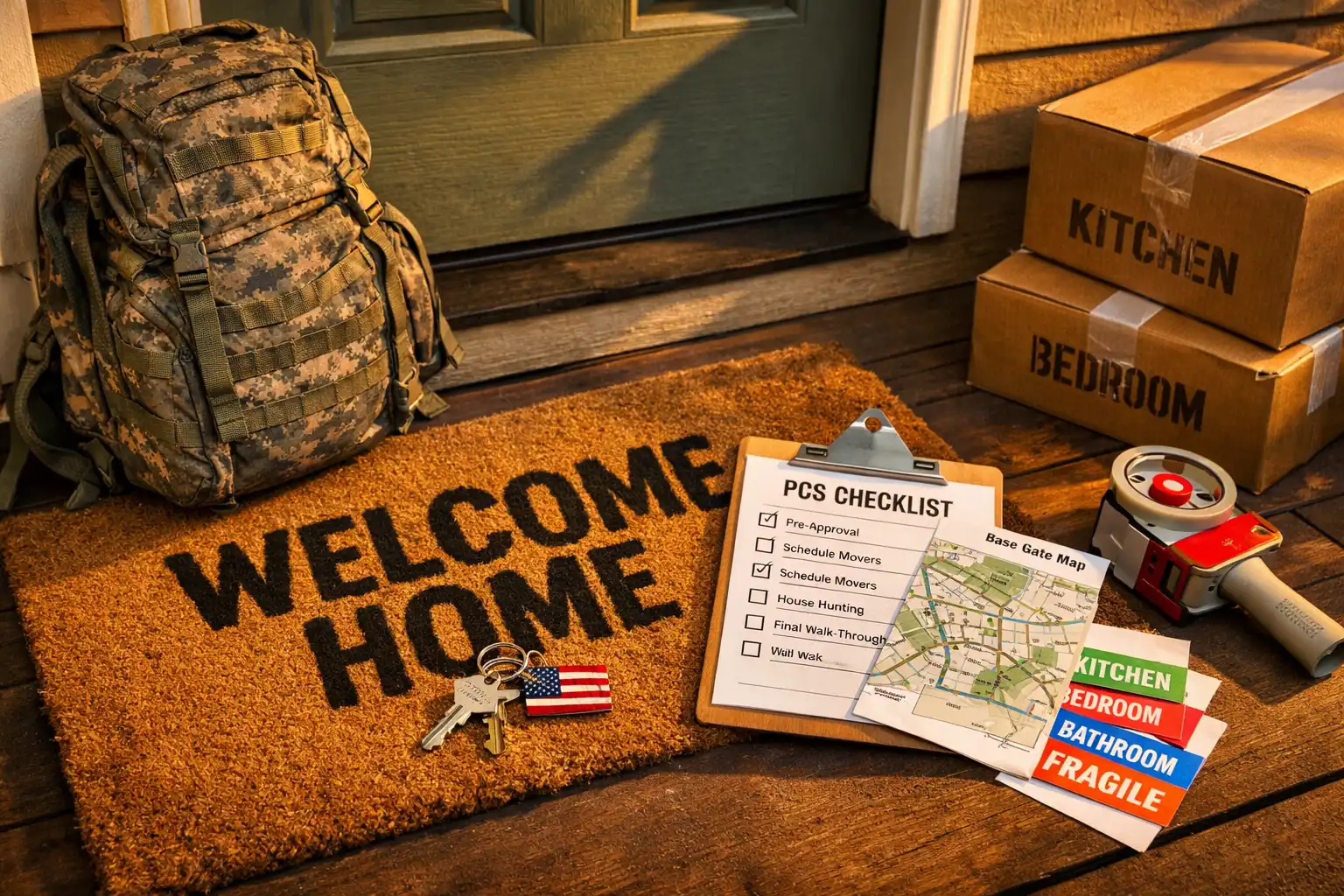
Quick brief: Long-distance homebuying during a Permanent Change of Station (PCS) is absolutely doable—if you plan like a commander and de-risk like a safety officer. Work backward from your report date, assemble a VA-savvy team, use tech for sight-unseen showings, and keep contingencies that protect your family and your orders. Here’s your mission checklist—clear, prioritized, and ready to execute.
- 1) Timeline: Back-Plan From Your Report Date
- 2) Budget: Build Around BAH, Not Hopes
- 3) Financing: VA Loan Readiness
- 4) Location Intel: Gates, Commutes, and Daily Life
- 5) Sight-Unseen Risk Controls: How to “See” What Photos Hide
- 6) Offer Strategy: Competitive Without Reckless
- 7) Due Diligence: Inspection, Appraisal, and Insurance
- 8) Closing Logistics: Remote Signings, Notaries, and POA
- 9) PCS Integration: HHG/PPM, TLE/TLA, and Arrival Planning
- 10) Future-Proofing: Resale, Rentability, and Maintenance
- Extra Factors That Save Time, Money, and Stress
- FAQs
- How Compass Military Division Makes This Easier
- Disclaimer
- Official Resources
1) Timeline: Back-Plan From Your Report Date
Your report date dictates every real estate milestone (pre-approval, offer, appraisal, HHG delivery, possession). Start with the end in mind:
- T-120 to T-90 days: Get fully pre-approved, confirm your Certificate of Eligibility (COE), and define neighborhoods.
- T-60 to T-45: Tour via live video, shortlist, and write offers.
- T-45 to T-30: Inspections and appraisal.
- T-30 to T-10: Insurance, utilities, closing method (remote/in-person), and HHG (Household Goods) timing.
Why it matters: PCS calendars compress fast. A structured timeline keeps you from paying for avoidable hotel nights (TLE/TLA) and reduces stress on spouses, kids, and pets.
2) Budget: Build Around BAH, Not Hopes
BAH (Basic Allowance for Housing) varies by ZIP, paygrade, and dependency status—and it changes over time. Don’t guess; use the official DTMO BAH calculator to set a realistic monthly cap. Then layer in:
- PITI (Principal, Interest, Taxes, Insurance) + HOA/COA dues.
- Utilities and commute costs (fuel/tolls/gate traffic) and a PCS reserve.
- Exit strategy math: If you’ll PCS again soon, ask: “Would likely market rent cover PITI + a property manager?” If not, stay flexible.
Note: We never quote rates. Partner with a VA-savvy lender for current numbers and options.
3) Financing: VA Loan Readiness
The VA loan is a powerful tool: potential $0 down, no monthly PMI, and flexible credit parameters. Key concepts:
- COE: Proves your entitlement; your lender can often retrieve it. Learn how to apply directly with VA.
- Funding Fee: May apply; certain exemptions exist (e.g., qualifying disability ratings). See VA’s overview of funding fee & closing costs.
- Occupancy: VA requires you to intend to occupy within a reasonable time—coordinate if training/TDY delays arrival.
- Appraisal vs. Inspection: VA appraisal checks Minimum Property Requirements (MPRs) for safety/soundness; it’s not a home inspection. See VA loan types here and the Lender’s Handbook (MPR/Appraisal) here.
Bottom line: A fully underwritten pre-approval makes you competitive and reduces surprises under contract.
4) Location Intel: Gates, Commutes, and Daily Life
Buying sight-unseen doesn’t mean buying uninformed. Prioritize:
- Gate proximity and traffic patterns: Morning/evening backups, alternate gates, and weekend closures.
- Time-to-mission nodes: Childcare, schools, commissary, Exchange, and medical/dental access.
- Noise and flight paths: Training ranges, air corridors, and local construction.
- Neighborhood rules: HOA/COA policies (parking, fencing, pets, short-term or long-term leasing).
Pro tip: Ask your agent to record gate-to-driveway drives at peak and off-peak hours. That one video often makes the decision.
5) Sight-Unseen Risk Controls: How to “See” What Photos Hide
A good agent’s camera work is your second set of eyes. Require:
- Live video tours that pause on the non-glamour items: street grade, drainage, road noise, outlets, closet depths, attic access, and exterior grading.
- Light and sound checks at multiple times of day to catch glare and traffic.
- Disclosures + data pack: Recent comps, days on market, list-to-sale ratio, neighborhood turnover, and major system ages (roof/HVAC/water heater).
Add inspection add-ons common to the region: sewer scope, termite/WDO, radon, roof certification, or foundation opinion if needed.
6) Offer Strategy: Competitive Without Reckless
Sight-unseen buyers can still win—without giving up protection:
- Keep the critical contingencies: Financing, inspection, and appraisal.
- Right-size timelines: Shorter inspection windows can help—if you’ve pre-scheduled inspectors with your agent’s help.
- Flexible possession: Offer rent-back (seller stays briefly after closing) or a flexible close aligned to your report date.
- Earnest money logic: Strong but not reckless; confirm state norms and how funds are protected if orders change events.
Ask your agent to present your strong file and PCS timing professionally—sellers respond to clarity and certainty.
7) Due Diligence: Inspection, Appraisal, and Insurance
These three elements determine whether your contract lands on time:
- Inspection: Be on video with the inspector/agent. Separate health/safety issues from cosmetic items; negotiate repairs or credits accordingly.
- Appraisal: If value returns low, tools include reconsideration of value, seller concessions, or contract adjustment—your agent/lender will guide options.
- Insurance: Shop early. Confirm wind/hail, flood, and any special coverage typical for the area. Ask about prior claims (CLUE), roof age, and wildfire/storm risk where relevant.
Heads-up: Some insurers and underwriters require specific repair sign-offs before closing—build time for that.
8) Closing Logistics: Remote Signings, Notaries, and POA
Long-distance closings hinge on what’s legal in the property’s state:
- RON (Remote Online Notarization): Allowed in many states; if not, use a mobile notary or plan a quick in-person signing.
- Military Power of Attorney (POA): If you or your spouse will sign for the other, have POA drafted and pre-cleared by lender and title well in advance.
- Recording and keys: Confirm funding/recording cutoffs; align your HHG delivery so you’re not paying extra TLE/TLA nights.
Your agent and title team should deliver a written closing plan with exact dates, who signs what, and contingency backups.
9) PCS Integration: HHG/PPM, TLE/TLA, and Arrival Planning
Real estate success means housing + logistics working together:
- HHG vs. PPM/DITY: Decide early. PPM requires certified weight tickets; reimbursements follow the Joint Travel Regulations (JTR).
- TLE/TLA: TLE is CONUS; TLA is OCONUS. Use deliberately to bridge closing and delivery days—not by accident. Read more on TLE and TLA.
- Utilities and access: Schedule utilities/Internet to start on possession. Plan for rekey and a cleaning crew within 24 hours of closing.
- First-night kit: Air mattress, linens, shower curtain, cookware basics, and pet essentials if HHG lags.
If keys and goods won’t sync, consider seller rent-back, short-term furnished rental, or a lightweight camping setup for a few days.
For POV shipping/storage guidance, see USTRANSCOM’s portal: PCSMYPov.com.
10) Future-Proofing: Resale, Rentability, and Maintenance
Even if you’ll live there today, think like Future-You:
- Resale drivers: Functional layout, curb appeal, and proximity to gates/services.
- Rentability: Pet-friendly flooring, neutral paint, fenced yard, and HOA rules that allow long-term leasing.
- Reserve fund: Budget for inevitable replacements (HVAC/appliances/roof).
- Documentation: Keep inspection reports, receipts, warranties, and photos for future tenants or buyers.
A home that’s easy to live in and easy to rent is a strategic PCS asset.
Extra Factors That Save Time, Money, and Stress
- Communication cadence: Set a weekly battle rhythm with your agent and lender; use shared checklists and secure document portals.
- Privacy & security: Never email SSNs or medical info. Use lender/title portals for uploads.
- Fair housing awareness: We’ll offer objective neighborhood data (commute, amenities, housing stock) without steering or discrimination.
- Local variance: Closing practices, RON rules, and appraisal timelines vary by state/market—your on-the-ground team keeps you inside the lines.
FAQs
Is a VA offer less competitive?
No. Strong, fully-underwritten files close every day. Sellers value certainty and clean contracts—your PCS clarity is an advantage.Can I buy “as-is” with a VA loan?
Yes—if the property meets VA MPRs or agreed repairs are completed so the loan can fund. Your inspection is still your go/no-go.What if appraisal runs late?
Pre-wire realistic timelines up front. If delays happen, your agent can pursue extensions or value reconsideration per lender guidelines.Can my spouse sign while I’m deployed/TDY?
Often yes—with a POA that meets lender and title requirements. Get it drafted and approved early.Do I need to be physically present to close?
Not always. Many states permit remote online notarization; others allow mobile notaries. We’ll align the method to the state’s rules and your schedule.
How Compass Military Division Makes This Easier
We tailor your purchase plan to your orders. Expect:
- Base-savvy search: Gate commute videos, traffic timing, and neighborhood data, not guesses.
- Sight-unseen confidence: Structured live tours that linger on the details photos skip.
- Tight operations: Lender/title coordination, inspection scheduling, and closing logistics—RON/mobile notary where allowed.
- PCS alignment: Keys and HHG synced to minimize TLE/TLA.
Next step: Tell us your gaining installation and report date. We’ll build your custom PCS homebuying timeline and shortlist—so you land, unlock, and sleep in your own home.
Disclaimer
Educational only—not legal, tax, medical, or financial advice. Rules and guidelines (DoD/VA, funding fee, closing practices, appraisal timelines, insurance availability) can change. Always confirm specifics with your lender, legal counsel, finance office, and official sources.
Official Resources
PCS / Entitlements / Regulations
- Joint Travel Regulations (JTR)
- Military OneSource — PCS Hub
- MilMove (PPM/DITY)
- TLA (OCONUS)
- TLE (CONUS)
- POV Shipping (USTRANSCOM)
BAH & Pay
VA Home Loans
- VA Home Loans Hub
- COE — How to Apply
- VA-Backed Purchase Loan
- Funding Fee & Closing Costs
- VA Lender’s Handbook (MPR/Appraisal)
Social Cookies
Social Cookies are used to enable you to share pages and content you find interesting throughout the website through third-party social networking or other websites (including, potentially for advertising purposes related to social networking).